















Обзор
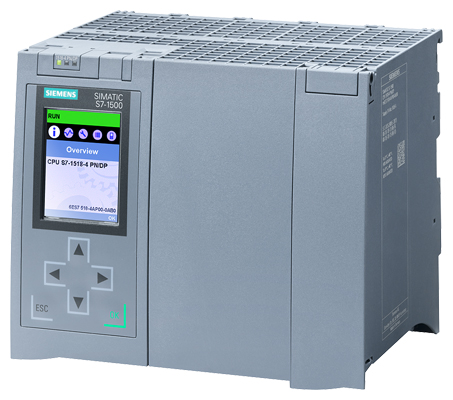
- The CPU with a very large program and data memory in the S7-1500 Controller product range for demanding applications with extremely high requirements regarding program scope, performance and networking
- Extremely high processing speed for binary and floating-point arithmetic
- For cross-industry automation tasks in series machine, special machine and plant construction
- Used as central controller in production lines with central and distributed I/O
- PROFINET IO IRT interface with 2-port switch
- PROFINET IO controller for operating distributed I/O on PROFINET
- PROFINET I-Device for connecting the CPU as an intelligent PROFINET device with a SIMATIC or third-party PROFINET IO controller
- Two additional PROFINET interfaces with separate IP addresses; for network separation. The PROFINET interface X2 can be used for connecting additional PROFINET IO RT devices or for fast communication as an I-device. The PROFINET interface X3 facilitates data transfer at a speed of 1 Gbps.
- PROFIBUS DP master interface
- OPC UA Server and Client as Runtime option for the easy connection of SIMATIC S7-1500 to third-party devices/systems with the functions:
- OPC UA Data Access
- OPC UA Security
- OPC UA Methods Call
- Support of OPC UA Companion Specifications
- OPC UA Alarms and Conditions - Central and distributed isochronous mode on PROFIBUS and PROFINET
- Integrated Motion Control functionalities for controlling speed-controlled and positioning axes, support for external encoders, precise position gearing between axes, output cams/cam tracks and probes
- Integrated web server with the option of creating user-defined web pages
Note:
SIMATIC Memory Card required for operation of the CPU
SIPLUS extreme products are based on SIMATIC standard products. The contents listed here were taken from the respective standard products. SIPLUS extreme-specific information was added.
Область применения
The CPU 1518-3 PN is the fastest S7-1500 CPU with very large program and data memory for demanding tasks in applications that also contain distributed automation structures alongside central I/O. It can be used, for example, as a central controller in production lines or as a machine controller with high processing speed demands.
The CPU 1518-3 PN can be used as a PROFINET IO controller or as distributed intelligence (PROFINET I-Device). The two integrated PROFINET IO IRT interfaces are each designed as a 2-port switch so that a linear topology can be set up in the system.
The additional integrated PROFINET interface with separate IP address can be used, for example, for network separation. The PROFINET X3 interface can be used with a transmission rate of 1 Gbps, e.g. for communication with the backbone.
In addition, the CPU offers comprehensive control functionalities as well as the option of connecting drives via standardized PLCopen blocks.
Дизайн
The CPU 1518-3 PN features:
- A powerful processor:
The CPU achieves command execution times as low as 0.3 ns per binary instruction. - A large work memory:
12 MB for program, 150 MB for data - SIMATIC Memory Cards as load memory;
Permit additional functions such as datalog and archives - Flexible expansion capability:
single-tier configuration with max. 32 modules (CPU + 31 modules) - Display with functions for
- Display of overview information such as IP address of the integrated interface, station name, plant designation, location designation, etc.
- Display and acknowledgment of diagnostic and user messages
- Display of module information
- Showing display settings
- Display of a user-definable logo
- Setting of IP addresses
- Setting of date and time
- Switchover of operating mode
- Resetting the CPU to factory settings
- Backup and restoring of the project
- Disabling/enabling of the display
- Enabling protection levels
- Two PROFINET IO IRT interfaces for connecting distributed I/O via PROFINET
- PROFINET interface X3 with a data transfer rate of up to 1 Gbps
Функции
- Performance
- Faster command processing, depending on the CPU type, language extensions, and new data types
- Fast reaction times of the CPUs due to high-performance backplane bus
- High-performance network connection:
PROFINET IO IRT (2-port switch) as standard interfaces. The additional PROFINET interface X3 with a separate IP address can be used for network separation and communication with the backbone with a transmission rate of 1 Gbps
- Integrated technology
- Connection of analog and PROFIdrive-capable drives via standardized blocks (PLCopen)
- Support of speed-controlled and positioning axes as well as external encoders, precise position gearing between axes
- Trace functions for all CPU tags, both for diagnostics in real time as well as for sporadic error detection; can also be called via the web server of the CPU
- Comprehensive control functionalities, e.g. easy to configure blocks for automatic optimization of the control parameters for optimum control quality
- Security Integrated
- Password-based know-how protection against unauthorized read-out and modification of program blocks
- Copy protection for tying individual blocks to the serial number of the SIMATIC Memory Card: The block can only run if the configured memory card is inserted in the CPU.
- 4-level authorization concept:
Communication to HMI devices can also be restricted. - Tamper protection:
The controller recognizes changed or unauthorized transmissions of the engineering data.
- Design and handling
- Display of overview information:
E.g. Station name, plant designation, location designation, etc., diagnostics information, module information, display settings. - Possible operations on the display:
Set addresses of the CPU or connected Ethernet communications processors, set date and time, select operating mode of CPU, reset CPU to factory settings, disable/enable display, activate protection levels, acknowledge messages, back up and restore projects.
- Display of overview information:
- Integrated system diagnostics
- System diagnostics information is displayed consistently and in plain text in the display, TIA Portal, HMI devices and web server, even for messages from the drives, and updated even if the CPU is in STOP mode.
- Integrated in the firmware of the CPU, no special configuration is required
- SIMATIC Memory Card (required for operation of the CPU)
- Used as plug-in load memory or for updating the firmware
- Also for storing additional documents or csv files (for recipes and archives)
- Creation of data blocks and storage/reading of data via SFCs of the user program
- Data log (archives) and recipes
- Storage of csv files for recipes and archives on the SIMATIC Memory Card;
easy access to plant-relevant operating data using Office tools or via web server - Easy access to machine configuration data by means of a web browser or SD card reader (two-way data exchange from and to the controller)
- Storage of csv files for recipes and archives on the SIMATIC Memory Card;
- Programming
- Programming with STEP 7 Professional, as of V20
Технические данные
Article number |
6AG1518-3AT10-4AB0 |
|
|---|---|---|
SIPLUS S7-1500 CPU 1518-3 PN/DP |
||
General information |
||
Product type designation |
CPU 1518-3 PN |
|
Firmware version |
||
|
Yes |
|
based on |
6ES7518-3AT10-0AB0 |
|
Product function |
||
|
Yes; I&M0 to I&M3 |
|
|
Yes; Distributed and central; with minimum OB 6x cycle of 125 µs (distributed) and 1 ms (central) |
|
|
Yes |
|
Configuration control |
||
via dataset |
Yes |
|
Display |
||
Screen diagonal [cm] |
6.1 cm |
|
Control elements |
||
Number of keys |
8 |
|
Mode buttons |
2 |
|
Supply voltage |
||
Rated value (DC) |
24 V |
|
permissible range, lower limit (DC) |
19.2 V |
|
permissible range, upper limit (DC) |
28.8 V |
|
Reverse polarity protection |
Yes |
|
Mains buffering |
||
|
5 ms |
|
|
1/s |
|
Input current |
||
Current consumption (rated value) |
1.35 A; 1.45 A with performance boost |
|
Current consumption, max. |
2.1 A |
|
Inrush current, max. |
2.1 A; Rated value |
|
I²t |
0.5 A²·s |
|
Power |
||
Infeed power to the backplane bus |
12 W |
|
Power consumption from the backplane bus (balanced) |
30 W |
|
Power loss |
||
Power loss, typ. |
20.4 W; 22.8 W with performance boost |
|
Storage |
||
Number of slots for SIMATIC memory card |
1 |
|
SIMATIC memory card required |
Yes |
|
Work memory |
||
|
12 Mbyte |
|
|
150 Mbyte |
|
Load memory |
||
|
32 Gbyte |
|
Backup |
||
|
Yes |
|
CPU processing times |
||
for bit operations, typ. |
0.3 ns |
|
for word operations, typ. |
0.8 ns |
|
for fixed point arithmetic, typ. |
0.8 ns |
|
for floating point arithmetic, typ. |
2.5 ns |
|
CPU-blocks |
||
Number of elements (total) |
40 000; Blocks (OB, FB, FC, DB) and UDTs |
|
DB |
||
|
1 ... 60 999; subdivided into: number range that can be used by the user: 1 ... 59 999, and number range of DBs created via SFC 86: 60 000 ... 60 999 |
|
|
16 Mbyte; For DBs with absolute addressing, the max. size is 64 KB |
|
FB |
||
|
0 ... 65 535 |
|
|
1 Mbyte |
|
FC |
||
|
0 ... 65 535 |
|
|
1 Mbyte |
|
OB |
||
|
1 Mbyte |
|
|
100 |
|
|
20 |
|
|
20 |
|
|
20; with minimum OB 3x cycle of 100 µs |
|
|
50 |
|
|
3 |
|
|
3 |
|
|
2 |
|
|
100 |
|
|
4 |
|
|
2 |
|
|
1 |
|
Nesting depth |
||
|
24 |
|
Counters, timers and their retentivity |
||
S7 counter |
||
|
2 048 |
|
Retentivity |
||
|
Yes |
|
IEC counter |
||
|
Any (only limited by the main memory) |
|
Retentivity |
||
|
Yes |
|
S7 timer |
||
|
2 048 |
|
Retentivity |
||
|
Yes |
|
IEC timer |
||
|
Any (only limited by the main memory) |
|
Retentivity |
||
|
Yes |
|
Data areas and their retentivity |
||
Retentive data area (incl. timers, counters, flags), max. |
4.5 Mbyte; In total; available retentive memory for bit memories, timers, counters, DBs, and technology data (axes): 700 KB |
|
Extended retentive data area (incl. timers, counters, flags), max. |
100 Mbyte; When using PS 6 0W 24/48/60 V DC HF |
|
Flag |
||
|
16 kbyte |
|
|
8; 8 clock memory bit, grouped into one clock memory byte |
|
Data blocks |
||
|
Yes |
|
|
No |
|
Local data |
||
|
64 kbyte; max. 16 KB per block |
|
Address area |
||
Number of IO modules |
16 384; max. number of modules / submodules |
|
I/O address area |
||
|
32 kbyte; All inputs are in the process image |
|
|
32 kbyte; All outputs are in the process image |
|
per integrated IO subsystem |
||
|
32 kbyte |
|
|
32 kbyte |
|
per CM/CP |
||
|
8 kbyte |
|
|
8 kbyte |
|
Subprocess images |
||
|
32 |
|
Hardware configuration |
||
Number of distributed IO systems |
64; A distributed I/O system is characterized not only by the integration of distributed I/O via PROFINET or PROFIBUS communication modules, but also by the connection of I/O via AS-i master modules or links (e.g. IE/PB-Link) |
|
Number of DP masters |
||
|
8; A maximum of 8 CMs/CPs (PROFIBUS, PROFINET, Ethernet) can be inserted in total |
|
Number of IO Controllers |
||
|
2 |
|
|
8; A maximum of 8 CMs/CPs (PROFIBUS, PROFINET, Ethernet) can be inserted in total |
|
Rack |
||
|
32; CPU + 31 modules |
|
|
1 |
|
PtP CM |
||
|
the number of connectable PtP CMs is only limited by the number of available slots |
|
Time of day |
||
Clock |
||
|
Hardware clock |
|
|
6 wk; At 40 °C ambient temperature, typically |
|
|
10 s; Typ.: 2 s |
|
Operating hours counter |
||
|
16 |
|
Clock synchronization |
||
|
Yes |
|
|
Yes; via PROFIBUS CM / CP |
|
|
Yes; via PROFIBUS CM / CP |
|
|
Yes |
|
|
Yes |
|
|
Yes |
|
Interfaces |
||
Number of PROFINET interfaces |
3 |
|
Number of PROFIBUS interfaces |
0 |
|
1. Interface |
||
Interface types |
||
|
Yes; X1 |
|
|
2 |
|
|
Yes |
|
Protocols |
||
|
Yes; IPv4 |
|
|
Yes |
|
|
Yes |
|
|
Yes |
|
|
Yes; Optionally also encrypted |
|
|
Yes |
|
|
Yes |
|
PROFINET IO Controller |
||
Services |
||
|
Yes |
|
|
Yes; Requirement: IRT and isochronous mode (MRPD optional) |
|
|
Yes |
|
|
Yes |
|
|
Yes; per user program |
|
|
Yes; Max. 32 PROFINET devices |
|
|
512; in total, up to 1661 distributed I/O devices can be connected via AS-i, PROFIBUS or PROFINET |
|
|
64; with DFP: 256 IO devices in 8 DFP groups |
|
|
512 |
|
|
512 |
|
|
8; in total across all interfaces |
|
|
8 |
|
|
The minimum value of the update time also depends on communication share set for PROFINET IO, on the number of IO devices, and on the quantity of configured user data |
|
Update time for IRT |
||
|
125 µs |
|
|
187.5 µs |
|
|
250 µs to 4 ms |
|
|
500 µs to 8 ms |
|
|
1 ms to 16 ms |
|
|
2 ms to 32 ms |
|
|
4 ms to 64 ms |
|
|
Update time = set "odd" send clock (any multiple of 125 µs: 375 µs, 625 µs ... 3 875 µs) |
|
Update time for RT |
||
|
250 µs to 128 ms |
|
|
500 µs to 256 ms |
|
|
1 ms to 512 ms |
|
|
2 ms to 512 ms |
|
|
4 ms to 512 ms |
|
PROFINET IO Device |
||
Services |
||
|
Yes |
|
|
Yes; Minimum send cycle of 250 µs |
|
|
Yes |
|
|
Yes; per user program |
|
|
Yes |
|
|
Yes |
|
|
4 |
|
|
Yes; per user program |
|
|
Yes; per user program |
|
2. Interface |
||
Interface types |
||
|
Yes; X2 |
|
|
2 |
|
|
Yes |
|
Protocols |
||
|
Yes; IPv4 |
|
|
Yes |
|
|
Yes |
|
|
Yes |
|
|
Yes; Optionally also encrypted |
|
|
Yes |
|
|
Yes |
|
PROFINET IO Controller |
||
Services |
||
|
Yes |
|
|
Yes; Requirement: IRT and isochronous mode (MRPD optional) |
|
|
Yes |
|
|
No |
|
|
Yes; per user program |
|
|
No |
|
|
512; in total, up to 1661 distributed I/O devices can be connected via AS-i, PROFIBUS or PROFINET |
|
|
64; with DFP: 256 IO devices in 8 DFP groups |
|
|
512 |
|
|
512 |
|
|
8; in total across all interfaces |
|
|
Yes |
|
|
8 |
|
|
The minimum value of the update time also depends on communication share set for PROFINET IO, on the number of IO devices, and on the quantity of configured user data |
|
Update time for IRT |
||
|
250 µs to 4 ms |
|
|
500 µs to 8 ms |
|
|
1 ms to 16 ms |
|
|
2 ms to 32 ms |
|
|
4 ms to 64 ms |
|
|
Update time = set "odd" send clock (any multiple of 125 µs: 375 µs, 625 µs ... 3 875 µs) |
|
Update time for RT |
||
|
250 µs to 128 ms |
|
|
500 µs to 256 ms |
|
|
1 ms to 512 ms |
|
|
2 ms to 512 ms |
|
|
4 ms to 512 ms |
|
PROFINET IO Device |
||
Services |
||
|
Yes |
|
|
Yes |
|
|
No |
|
|
Yes; per user program |
|
|
No |
|
|
Yes |
|
|
4 |
|
|
Yes; per user program |
|
|
Yes; per user program |
|
3. Interface |
||
Interface types |
||
|
Yes; X3 |
|
|
1 |
|
|
No |
|
Protocols |
||
|
Yes; IPv4 |
|
|
No |
|
|
No |
|
|
Yes |
|
|
Yes; Optionally also encrypted |
|
|
Yes |
|
Interface types |
||
RJ 45 (Ethernet) |
||
|
Yes |
|
|
Yes; only possible at the X3 interface of the CPU |
|
|
Yes |
|
|
Yes |
|
|
Yes |
|
Protocols |
||
PROFIsafe |
No |
|
Number of connections |
||
|
384; via integrated interfaces of the CPU and connected CPs / CMs |
|
|
10 |
|
|
320 |
|
|
64 |
|
Redundancy mode |
||
|
No |
|
|
No |
|
|
Yes |
|
Media redundancy |
||
|
via the X1 or X2 interface |
|
|
Yes; MRP Automanager according to IEC 62439-2 Edition 2.0, MRP Manager; MRP Client |
|
|
Yes; as MRP ring node according to IEC 62439-2 Edition 3.0 |
|
|
Yes; Requirement: IRT |
|
|
200 ms; For MRP, bumpless for MRPD |
|
|
50 |
|
SIMATIC communication |
||
|
Yes; encryption with TLS V1.3 pre-selected |
|
|
Yes |
|
|
Yes |
|
|
Yes |
|
|
Yes |
|
|
See online help (S7 communication, user data size) |
|
Open IE communication |
||
|
Yes |
|
|
64 kbyte |
|
|
Yes |
|
|
Yes |
|
|
64 kbyte |
|
|
Yes |
|
|
2 kbyte; 1 472 bytes for UDP broadcast |
|
|
Yes; max. 128 multicast circuits |
|
|
Yes |
|
|
Yes |
|
|
Yes |
|
|
Yes |
|
|
Yes |
|
|
Yes; Optional |
|
Web server |
||
|
Yes; Standard and user pages |
|
|
Yes; Standard and user pages |
|
|
||
|
200 |
|
|
4 |
|
|
131 072 byte |
|
OPC UA |
||
|
Yes; "Large" license required |
|
|
Yes; Data Access (registered Read/Write), Method Call |
|
|
Yes |
|
|
Available security policies: None, Basic128Rsa15, Basic256Rsa15, Basic256Sha256 |
|
|
"anonymous" or by user name & password |
|
|
40 |
|
|
5 000 |
|
|
300 |
|
|
20 |
|
|
100 |
|
|
1 |
|
|
5; for OPC_UA_MethodCall 300 in total (no limit per connection) |
|
|
5 000 |
|
|
100 |
|
|
20 |
|
|
Yes; data access (read, write, subscribe), method call, alarms & condition (A&C), custom address space, role-based access control |
|
|
Yes |
|
|
available security policies: None, Basic128Rsa15, Basic256Rsa15, Basic256Sha256, Aes128Sha256RsaOaep, Aes256Sha256RsaPss |
|
|
"anonymous" or by user name & password |
|
|
Yes |
|
|
64 |
|
|
200 000 |
|
|
50 000 |
|
|
50 |
|
|
10 ms |
|
|
10 ms |
|
|
8 000; max. 200 concurrently running jobs each for asynchronous instructions OPC_UA_ServerMethodPre (V1.1) and OPC_UA_ServerMethodPost (V1.1) |
|
|
20 |
|
|
60 000; for 1 s sampling interval and 1 s send interval |
|
|
10 of each "Server interfaces" / "Companion specification" type and 20 of the type "Reference namespace" |
|
|
200 000 |
|
|
Yes |
|
|
400 |
|
|
200 |
|
Further protocols |
||
|
Yes; MODBUS TCP |
|
S7 message functions |
||
Number of login stations for message functions, max. |
64 |
|
number of subscriptions, max. |
750 |
|
number of tags/attributes for subscriptions, max. |
120 000 |
|
Program alarms |
Yes |
|
Number of configurable program messages, max. |
20 000; Program messages are generated by the "Program_Alarm" block, ProDiag or GRAPH |
|
Number of loadable program messages in RUN, max. |
20 000 |
|
Number of simultaneously active program alarms |
||
|
4 000 |
|
|
1 000 |
|
|
960 |
|
Test commissioning functions |
||
Joint commission (Team Engineering) |
Yes; Parallel online access possible for up to 10 engineering systems |
|
Status block |
Yes; Up to 16 simultaneously (in total across all ES clients) |
|
Single step |
No |
|
Number of breakpoints |
20 |
|
Profiling |
Yes |
|
Status/control |
||
|
Yes |
|
|
Inputs/outputs, memory bits, DBs, distributed I/Os, timers, counters |
|
|
||
|
200; per job |
|
|
200; per job |
|
Forcing |
||
|
Yes |
|
|
Peripheral inputs/outputs |
|
|
200 |
|
Diagnostic buffer |
||
|
Yes |
|
|
3 200 |
|
|
1 000 |
|
Traces |
||
|
8 |
|
|
512 kbyte |
|
Interrupts/diagnostics/status information |
||
Diagnostics indication LED |
||
|
Yes |
|
|
Yes |
|
|
Yes |
|
|
Yes |
|
|
Yes |
|
Supported technology objects |
||
Motion Control |
Yes; Note: The number of technology objects affects the cycle time of the PLC program; selection guide via the TIA Selection Tool |
|
|
30 720 |
|
|
||
|
40 |
|
|
80 |
|
|
160 |
|
|
80 |
|
|
20 |
|
|
160 |
|
|
40 |
|
|
||
|
280 |
|
|
384 |
|
Controller |
||
|
Yes; Universal PID controller with integrated optimization |
|
|
Yes; PID controller with integrated optimization for valves |
|
|
Yes; PID controller with integrated optimization for temperature |
|
Counting and measuring |
||
|
Yes |
|
Standards, approvals, certificates |
||
Ecological footprint |
||
Global warming potential |
||
|
432 kg |
|
|
71.7 kg |
|
|
368 kg |
|
|
-7.7 kg |
|
Security |
||
PROFINET Security Class |
1 |
|
signed firmware update |
Yes |
|
Secure Boot |
Yes |
|
safely removing data |
Yes |
|
Ambient conditions |
||
Ambient temperature during operation |
||
|
0 °C; = Tmin (incl. condensation/frost) |
|
|
60 °C; = Tmax; 70 °C with SIPLUS S7-1500 Cooling Fan 175 mm (6AG1593-0AA01-7AA0); display: 50 °C, the display is switched off at an operating temperature of typically 50 °C |
|
|
0 °C; = Tmin (incl. condensation/frost) |
|
|
40 °C; = Tmax; display: 40 °C, at an operating temperature of typically 40 °C, the display is switched off |
|
Ambient temperature during storage/transportation |
||
|
-40 °C |
|
|
70 °C |
|
Altitude during operation relating to sea level |
||
|
5 000 m |
|
|
Tmin ... Tmax at 1 140 hPa ... 795 hPa (-1 000 m ... +2 000 m) // Tmin ... (Tmax - 10 K) at 795 hPa ... 658 hPa (+2 000 m ... +3 500 m) // Tmin ... (Tmax -20 K) at 658 hPa ... 540 hPa (+3 500 m ... +5 000 m) |
|
Relative humidity |
||
|
100 %; RH incl. condensation / frost (no commissioning in bedewed state), horizontal installation |
|
Resistance |
||
Coolants and lubricants |
||
|
Yes; Incl. diesel and oil droplets in the air |
|
Use in stationary industrial systems |
||
|
Yes; Class 3B2 mold, fungus and dry rot spores (with the exception of fauna); Class 3B3 on request |
|
|
Yes; Class 3C4 (RH < 75 %) incl. salt spray acc. to EN 60068-2-52 (severity degree 3); * |
|
|
Yes; Class 3S4 incl. sand, dust, * |
|
Use on ships/at sea |
||
|
Yes; Class 6B2 mold, fungal and dry rot spores (excluding fauna) |
|
|
Yes; Class 6C3 (RH < 75 %) incl. salt spray acc. to EN 60068-2-52 (severity degree 3); * |
|
|
Yes; Class 6S3 incl. sand, dust; * |
|
Usage in industrial process technology |
||
|
Yes; Class 3 (excluding trichlorethylene) |
|
|
Yes; Level GX group A/B (excluding trichlorethylene; harmful gas concentrations up to the limits of EN 60721-3-3 class 3C4 permissible); level LC3 (salt spray) and level LB3 (oil) |
|
Remark |
||
|
* The supplied plug covers must remain in place over the unused interfaces during operation! |
|
Conformal coating |
||
|
Yes; Class 2 for high reliability |
|
|
Yes; Type 1 protection |
|
|
Yes; Discoloration of coating possible during service life |
|
|
Yes; Conformal coating, Class A |
|
Configuration |
||
Programming |
||
Programming language |
||
|
Yes |
|
|
Yes |
|
|
Yes |
|
|
Yes |
|
|
Yes |
|
|
Yes |
|
Know-how protection |
||
|
Yes |
|
|
Yes |
|
|
Yes |
|
Access protection |
||
|
Yes |
|
|
Yes |
|
|
Yes |
|
|
Yes |
|
|
No |
|
|
Yes |
|
|
Yes; device-wide and centralized |
|
|
100 |
|
|
100 |
|
|
50 |
|
Cycle time monitoring |
||
|
adjustable minimum cycle time |
|
|
adjustable maximum cycle time |
|
Dimensions |
||
Width |
175 mm |
|
Height |
147 mm |
|
Depth |
129 mm |
|
Weights |
||
Weight, approx. |
1 637 g |
|
Дальнейшая информация
More information and downloads
Manuals
The SIMATIC S7-1500 manuals can be downloaded free of charge from the Internet (SIMATIC Customer Support) under this link.
TIA Portal - An Overview of the Most Important Documents and Links - Controllers
You can find the overview under this link.
SIMATIC S7-1500 Display Simulator
You can use the S7-1500 Display Simulator to familiarize yourself with the different setting options and functions on the display under this link.
General information
is available under this link.
The TIA Selection Tool
is available under this link.